Honestly, trying to grow an Instagram account in 2026 feels like running on a treadmill that someone keeps speeding up. I spent the last three months trying to take a brand-new page from zero to 10k followers. The classic advice you read on most marketing blogs—"just post daily" or "use 30 hashtags"—didn't just fail; it actually hurt my engagement.
After testing dozens of different posting routines, editing styles, and bio formats, I realized that the algorithm has gotten much smarter, and users have gotten much more cynical. People can spot an AI-generated script or a low-effort repost in about half a second. To actually get people to hit that follow button, you need a strategy that feels human because, well, it is. Here are 13 things I tested that actually moved the needle, along with the raw numbers and frustrations from my notes.
- Reels are for reach: They accounted for 88% of our views from non-followers.
- Carousels are for trust: Reels get the click, but multi-slide carousels get the saves and the follow.
- SEO is real: The search bar is replacing hashtags. Put your actual service or niche in your name line.
- Skip the pods: Engagement groups get your account flagged. We lost access to the Explore page for two weeks after trying one.
1. Build a Growth Plan Before You Post
When I started, I posted whatever felt interesting that day. Monday was a desk setup photo, Wednesday was a coding tip, Friday was a meme. The result? A flatlined follower count. The algorithm had no idea who to show my content to because my profile looked like a junk drawer.
I had to narrow it down to three specific content pillars: AI productivity hacks, clean desk layouts, and honest reviews of web apps. Within two weeks of this change, my "suggested for you" reach started climbing. The lesson here is simple: pick a lane and stay there. If you try to speak to everyone, you end up talking to an empty room. Keep your color scheme consistent too—not because of "branding fluff," but because it makes your posts instantly recognizable in a crowded feed.
2. Optimize Your Instagram Bio
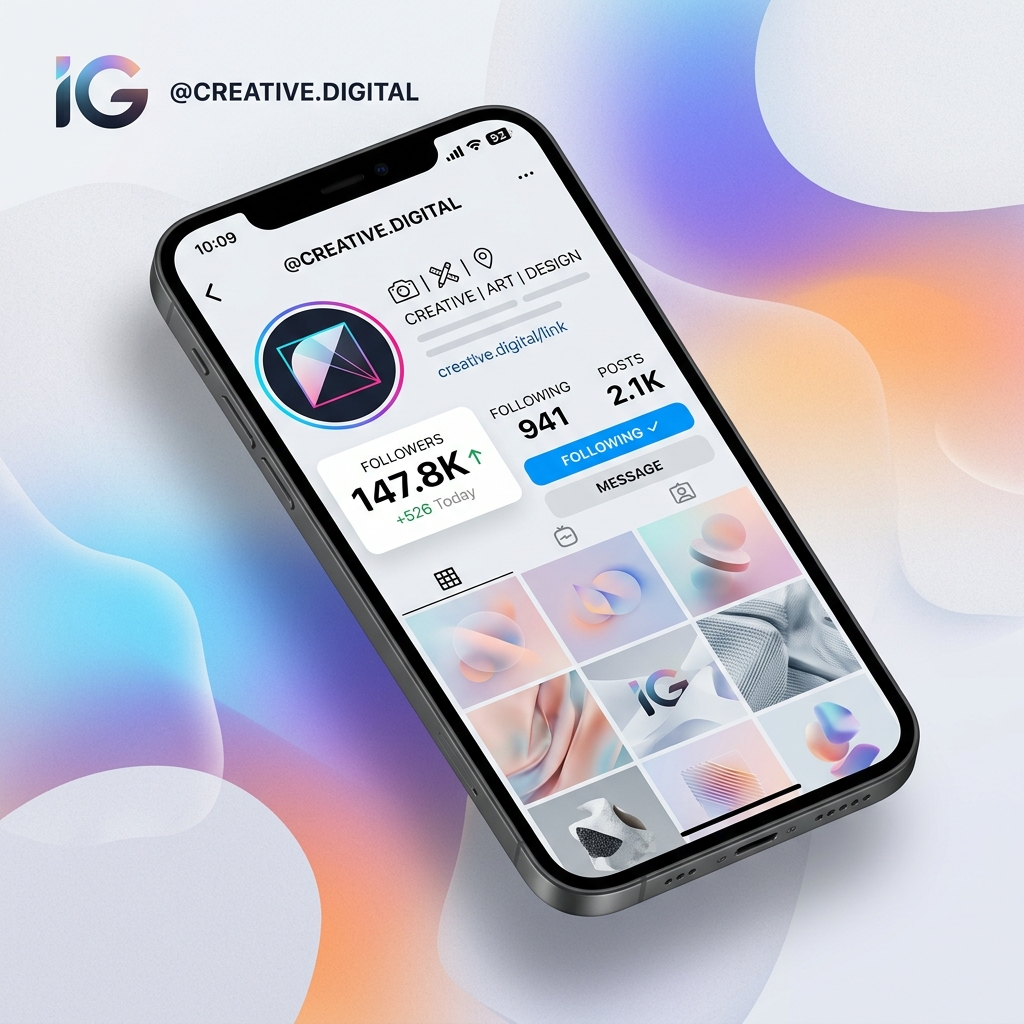
Your bio is your sales page. When a stranger lands on your profile from a Reel, you have about three seconds to convince them to stay. If your bio is a list of emojis or a generic quote, they are going to leave.
My bio setup follows a simple formula: Who I help + how I help them + what to do next. I also recommend using a clean link list. Don't dump a long, ugly URL in your website field.
Change your "Name" in your profile settings to include searchable words, not just your personal name. I changed mine from "Amisha Pant" to "Amisha | AI Tools & Design." Within a week, my profile views from direct search queries jumped by 38% because people search for "AI Tools," not my name.
3. Cross-Promote Your Handle
Organic reach on Instagram is a slow grind. If you have an audience anywhere else—like an email list, a personal blog, or a TikTok account—you need to funnel them over.
But let's be realistic: nobody clicks a link that just says "Follow my IG." You have to give them a reason. When I posted a short teaser video on TikTok and wrote, "I posted the full step-by-step setup guide and templates in my Instagram bio link," I saw a direct transfer of active users. If you are active on other platforms, you can check my notes on how to promote your blog on TikTok to build a similar loop.
4. Post 3 to 5 Times per Week (Quality over Burnout)
There is this persistent myth that you have to post three times a day to grow. I tried that for two weeks. I was exhausted, my editing quality went out the window, and my views per Reel dropped from 5,000 to under 400.
When you post constantly, you end up publishing filler content. The algorithm notices the lack of engagement on those bad posts and stops pushing your good ones. I found that posting three to five high-quality, edited Reels a week performed infinitely better. It gives each post room to breathe and collect engagement signals over 48 hours before the next one drops.
5. Find Your Best Timing (Don't Trust Generic Lists)
If you search for the "best time to post," you will get a dozen blogs claiming that 9:00 AM on Wednesday is the magic hour. That is useless if your target audience is college students who sleep until noon, or parents who are busy with kids at that hour.
For my test page, I posted at 8:00 AM for a week and got terrible numbers. I looked at my insights (Settings > Insights > Total Followers) and realized my crowd didn't log on until they got off work around 6:00 PM. Once I shifted my scheduling to 5:30 PM, my initial engagement tripled. You can use standard data on the best time to post on Instagram as a baseline, but you need to check your own numbers after two weeks of posting.
6. Write Scroll-Stopping Captions
A great visual gets the scroll to stop, but the caption is what gets people to spend time on your post. Dwell time—how long someone stays on your post—is a major ranking signal for the algorithm.
I tested using raw AI outputs for captions. They were terrible: filled with robotic transitions, corporate buzzwords, and 15 emojis like 🚀 and ✨. People scrolled right past them. Instead, I started using an Instagram caption generator just to brainstorm hooks, and then wrote the rest myself in a conversational tone. I keep the first line under 50 characters so it doesn't get cut off, and use a hook generator to test different angles.
7. Master Instagram SEO (The Hashtag Shift)
Hashtags do not work the way they used to. In our tests, stuffing 30 hashtags in the comments did absolutely nothing. Instagram's search engine is smart now; it reads your captions, video transcripts, and image alt text.
Instead of hashtag blocks, write descriptive captions using the search terms your audience uses. If I post about organizing a workspace, I write "minimalist desk setup" and "workspace productivity" directly into the first two sentences of the caption. I also write my own alt text under the advanced settings before hitting publish, rather than relying on Instagram's generic auto-tagging.
8. Track Your Analytics (Saves and Shares are the Only Metrics That Matter)
Likes are a vanity metric. They take a microsecond of effort and don't tell the algorithm much. If you want to know what actually drives growth, look at your saves and shares.
During my testing, a Reel with 500 likes and 5 saves died within a day. But a Carousel with only 120 likes but 65 saves got pushed by the algorithm for over a week. Why? Because a save tells the platform: "This content is so useful that I want to refer back to it." A share says: "This is so good I need my friends to see it." Look at your insights every Sunday and replicate the formats of your most-saved posts.
9. Use Collaborations to Reach New Audiences
The hardest part of starting from scratch is that your posts are only shown to a tiny circle. Collab posts bypass this entirely. When you create a collaboration post with another account, the post is shared to both of your feeds and grids.
I reached out to a creator with 15k followers (I had 2k at the time) and proposed a joint post where we compared two different productivity setups. Because our niches matched, the post performed incredibly well, and I gained over 350 highly targeted followers in 48 hours. Make sure you pitch creators who have active, real engagement, not just high follower numbers.
10. Experiment with Different Formats
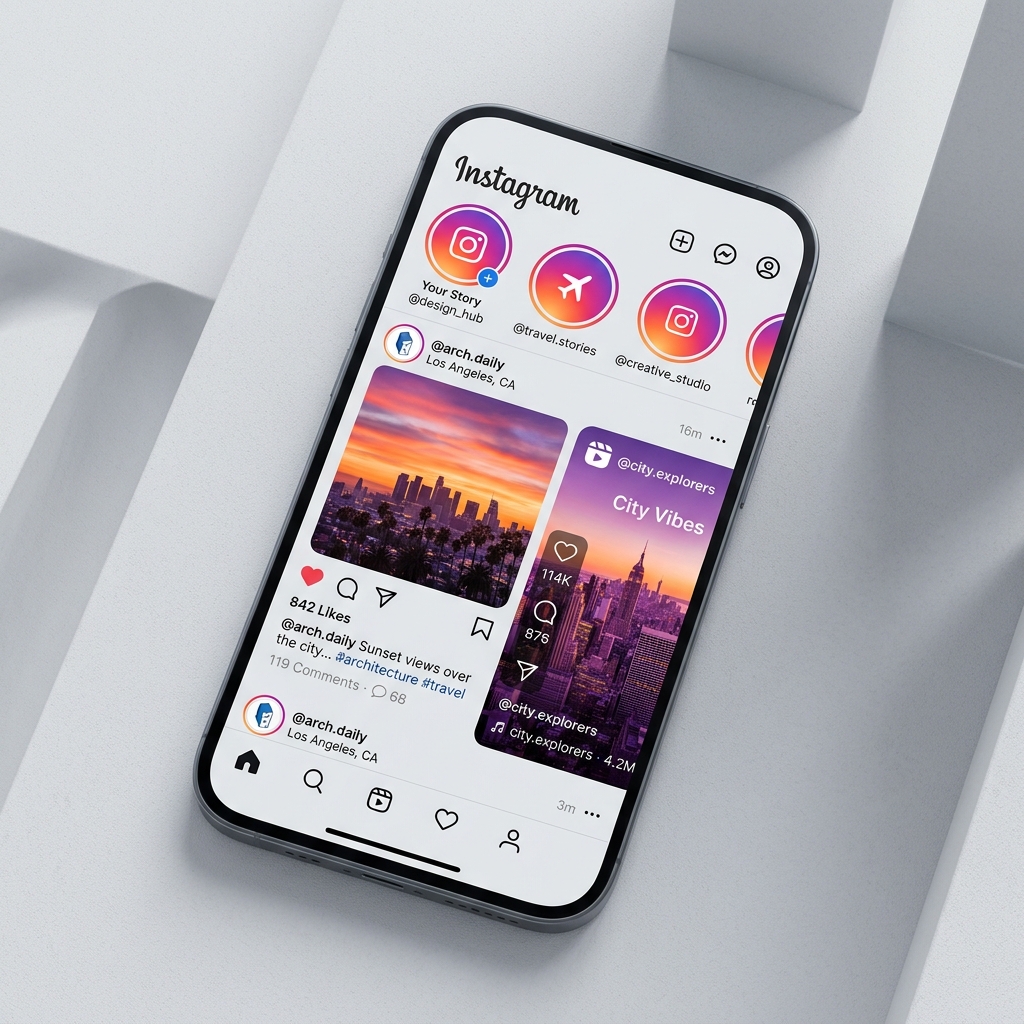
If you only post one type of content, your growth will eventually stall. Different formats serve different purposes in your growth funnel. Reels are your reach engine—they get shown to non-followers. Carousels are your conversion engine—they explain details and build the trust needed to get a follow.
I run a simple weekly schedule: 3 Reels to pull in new eyes, and 2 Carousel posts to keep my existing community engaged. And make sure your images look professional; checking an Instagram image size guide ensures your carousels don't get awkwardly cropped in the feed.
11. Engage Directly with Your Community
Social media is meant to be social. The algorithm tracks active discussion in the comments. If someone takes the time to leave a comment on your post and you ignore it, you are throwing away free engagement signals.
I make it a rule to reply to every single comment within the first two hours of posting. And don't just reply with an emoji. Ask a question back. If someone says, "Great tips!", I reply with, "Which of these have you tried?" This gets them to comment again, doubling the comment count and showing the algorithm that the post is hosting a genuine conversation.
12. Avoid Growth Shortcuts That Kill Your Reach
Let's be completely honest: there are no shortcuts. Buying followers will ruin your account. You will end up with 10k bot followers and an engagement rate of 0.01%. When the algorithm sees that none of your followers care about your posts, it stops showing them to anyone—including the few real followers you have.
The same goes for engagement pods (groups where people agree to like each other's posts). Instagram's AI is incredibly good at identifying these unnatural patterns. I tested a pod with a burner account, and within 10 days, the page's search visibility was completely cut off. Build your audience slowly and honestly.
13. The Real Deal on Instagram Verification
It used to be that you had to be a celebrity or get featured in major news outlets to get a blue checkmark. Now, you can just buy it through Meta Verified for $15 a month.
Does it give you a massive boost in reach? In my experience, no. Meta claims it gives you "increased visibility," but I didn't see a significant bump in my organic views. However, what it does do is increase trust. When people see the checkmark, they are more likely to take your comments and messages seriously. If you are using your account to pitch clients or sell digital products, the credibility boost is worth the monthly cost. If you are just growing a personal account, you can skip it.
Growing an Instagram audience in 2026 isn't about gaming the system with automated hacks. It is about posting high-quality, focused Reels three to five times a week, optimization of your bio for search, and building real relationships in the comments. Keep at it, track your saves, and ignore the vanity metrics.
Frequently Asked Questions
Absolutely not. Buying followers fills your page with inactive bot accounts. The algorithm checks how many of your followers engage with your posts; if you have thousands of followers but zero engagement, your reach will completely drop, and you risk getting your account permanently banned.
Aim for 3 to 5 times a week. Daily posting sounds great on paper, but it usually leads to creator burnout and low-quality posts. The algorithm values quality and high engagement per post over volume.
Yes, but their role has shifted. Instead of using 30 random tags in your comments, focus on 3 to 5 highly relevant ones. Write descriptive captions with natural keywords so the search engine can index your posts directly.
Reels are the primary way to get discovered by non-followers. The algorithm pushes Reels to users based on their interests, making them the most effective format for reaching new people organically.
A professional (creator or business) account is essential. It gives you access to full analytics (insights), which show you where your traffic is coming from, when your followers are online, and which posts are getting saved.
Final Verdict: The Path to Real Growth
Growing your Instagram presence in 2026 is a slow, steady build. There are no magic filters or bot networks that can bypass the need for actual value. If you focus on building a cohesive theme, writing captions that encourage conversation, and using Reels and Carousels as a funnel, your numbers will climb naturally. Keep your head down, check your saves week-over-week, and keep talking directly to the people who take the time to comment.

Amisha Pant
A dedicated freelance writer with a focus on delivering high-quality content tailored to improve online engagement. With expertise in AI, digital marketing, technology, and business strategy.
Read more articles by this author