I started a new TikTok channel back in January to test some video ideas. For two weeks straight, every single video I posted hit a wall at exactly 200 views. Not 190, not 220. Exactly 200. I was convinced the algorithm had put me on some secret blacklist, and that my account was effectively shadowbanned. But after digging into my analytics, the explanation was pretty mundane. I was getting stuck in the classic "200-view jail" because my videos failed to hold anyone's attention for more than a second. If you're struggling to get eyes on your content or trying to figure out the best when to post on TikTok, here is the unfiltered truth about why your views are flatlining and how I finally forced my videos past that 200-view threshold.
- The first two seconds decide your fate: If your opening visual or hook is boring, the rest of the video is wasted effort.
- Audio isn't just background noise: The app uses your sound to catalog your content. The wrong sound sends it to the wrong feed.
- Shares and saves are the gold standard: A like is lazy. A save or share signals high value to the algorithm.
- Keep it tight: Every unnecessary pause or breath in your edits is a cue for the viewer to swipe away.
1. Your Hook Is Too Slow (The Swiping Habit)
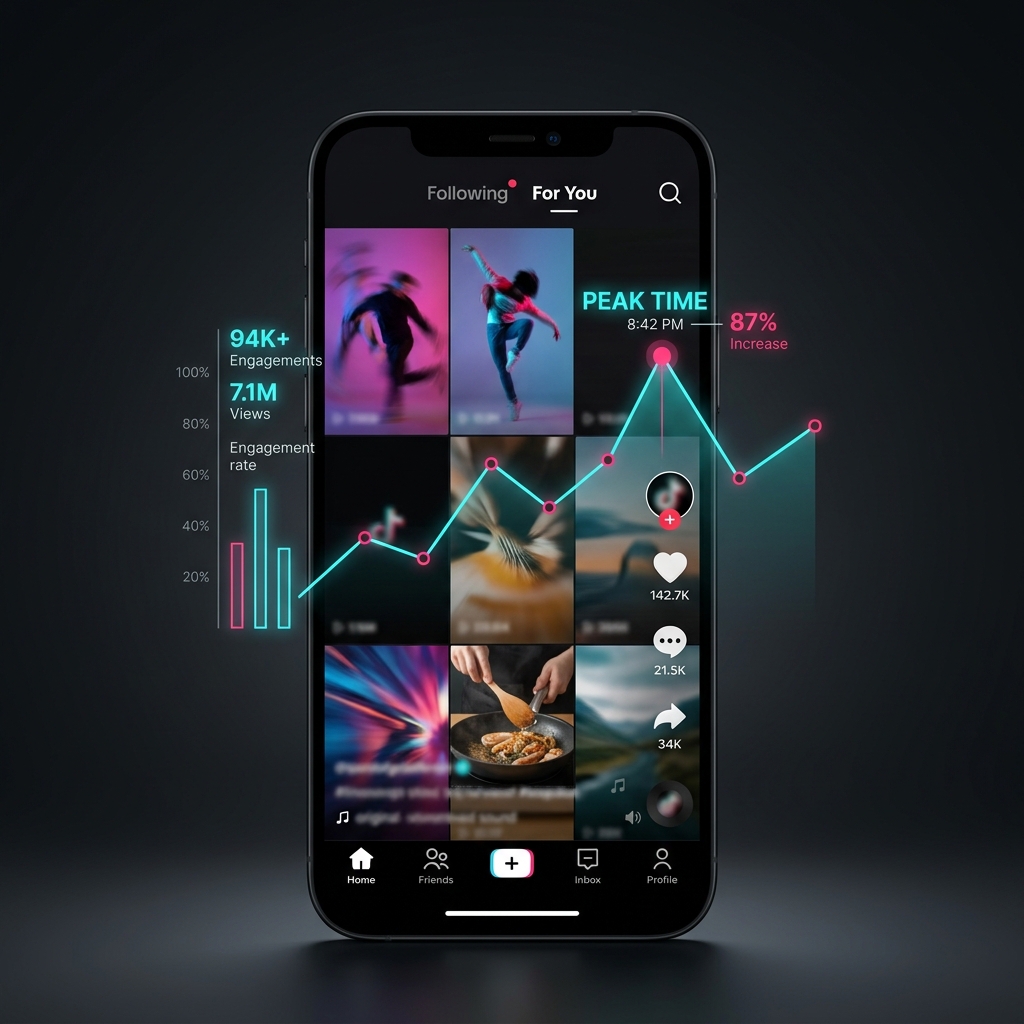
When I opened my TikTok analytics on those early 200-view videos, the graph looked like a cliff. Over 75% of viewers swiped away before the 2-second mark. My editing was clean and the information was solid, but I was starting my videos with "Hey guys, today I want to talk about..."
By the time I finished introducing myself, the viewer had already scrolled to a cat video. Nobody on TikTok wants a slow build-up. Even a quick TikTok story needs to punch immediately. If you waste those first critical frames on generic titles or talking heads that don't say anything, you're done.
Never start a video by telling people who you are or what you're about to do. They don't care yet. Put the absolute best visual or the biggest claim in the first frame, then explain it later.
How I Fixed It:
I stopped using self-indulgent intros. I started opening with bold, text-on-screen statements that made a promise. Sometimes I'd use a simple hook generator to spark ideas when my brain was fried, taking a basic line and twisting it into a visual question. Instead of "Here is my daily desk setup," I'd write: "The $20 item that saved my desk posture." It gives the viewer an immediate reason to stop scrolling.
2. You Are Using the Wrong Audio (The Emotional Vibe)
There's a popular myth that putting a high-tempo trending track at 1% volume behind your speaking video will trick the algorithm into giving you views. I tried this on four different videos, and it actually tanked my reach.
The TikTok algorithm relies heavily on audio metadata to categorize who should see your post. If you use a gaming track behind a video about personal finance, TikTok serves your video to gamers. When those gamers see a spreadsheet on their screen instead of gaming clips, they swipe immediately, signaling to the app that your video is garbage.
How I Fixed It:
I matched my sounds to the exact vibe of my content. If I'm talking about coding, I use low-key lo-fi beats that coders actually listen to. If I'm sharing original voiceovers, I make sure the audio is crisp and free of background hiss. Don't chase random trends just because they're on the chart; use audio that aligns with what your audience expects.
3. Low Retention and Completion Rates (The 200 View Jail)
TikTok's primary metric is watch time. If users don't watch your video all the way through, the app won't push it. This is why long, drawn-out videos often die early. The algorithm wants to keep people on the platform as long as possible, so it rewards completion.
To test this, I did a simple experiment: I tried the looping trick. I wrote my scripts so that the final sentence naturally flowed back into the very first sentence. The transition was so seamless that people didn't realize the video had restarted for a few seconds. My completion rate jumped from 12% to over 35%, and that video was the first one to finally break past the 200-view ceiling, landing at around 12,000 views.
Likes are easy to get and don't carry much weight. Shares and saves are the metrics that really push your videos. If a user saves your video to watch later, the algorithm views it as a major quality signal.
How I Fixed It:
I trimmed every single frame of silence. I cut my intakes of breath, my pauses, and my transitions. If a sentence could be said in five words instead of ten, I rewrote it. Keep your edits fast and dynamic to prevent the viewer's eyes from drifting.
4. Your Captions Are Not Search Optimized (The Discovery Gap)
More and more people are using TikTok like search. They search for "travel hacks" or "coding tips" instead of looking at the main feed. If you're only putting a single emoji in your caption, you are missing out on search traffic.
I tested this by using a basic blog topic generator and a smart caption generator to pull high-volume search phrases related to my niche. I wrote descriptive, keyword-rich captions instead of leaving them blank. One of my coding tutorials got very little traction on the For You Page, but it continues to pull hundreds of views every week from search because I optimized the caption for the phrase "CSS layout hacks 2026."
How I Fixed It:
Write captions that actually describe the video. Use three to five specific hashtags instead of spamming generic ones like #fyp or #foryou. Add auto-captions to your video so the algorithm can scan your spoken words for keywords as well.
5. You Are Posting at the Wrong Time (The Initial Spark)
Posting times do matter, but not in the way most people think. There is no magical hour that will save a bad video. However, posting when your target audience is active gives your video the initial engagement spark it needs.
If you post a tutorial at 3 AM when your audience is asleep, the video will sit in the queue. By the time they wake up, the algorithm has already moved on to newer uploads. Just like learning to prompt ChatGPT effectively to get the best responses, you need to align your post timing with the hours your audience is actually online.
How I Fixed It:
I checked my analytics tab for my followers' active hours. I found that my audience peaked at 7 PM on weekdays, so I started uploading my videos at 6:30 PM. This gave the platform time to process and index the video right as my followers logged on, giving me a much better early engagement rate.
6. Your Lighting and Framing Are Poor (The Professional Standard)
TikTok is a highly visual medium. If your video is dark, grainy, or poorly framed, people will swipe away immediately. The baseline quality standard on the platform is high, and users expect crisp visuals.
I noticed a massive difference in my view count when I stopped filming in my dimly lit room and moved my desk next to a window. The natural light immediately made my face clearer and the video looked like it was shot on a professional camera rather than an old phone.
Before you hit record, wipe your phone's camera lens with a cloth. It sounds incredibly basic, but our lenses collect pocket lint and fingerprints all day. A simple wipe turns a foggy, amateur video into a crisp, clean output.
How I Fixed It:
Film facing a light source, never with the light behind you. Keep your camera at eye level and use the grid overlay to make sure you're centered in the frame. If you're showing a product, make sure the camera is focused on it and that the background isn't cluttered.
7. The Niche Confusion Problem (Algorithmic Identity)
If you post a cooking video on Monday, a coding video on Tuesday, and a cat video on Wednesday, the algorithm gets confused. It doesn't know who to show your videos to. As a result, it shows them to random people who don't care, leading to low watch times and view counts.
To build an audience, you need to establish a clear identity. When people visit your profile, they should instantly understand what kind of content you create. If your profile is a random mix of thoughts, they are highly unlikely to click that follow button.
How I Fixed It:
I picked one specific topic—web development tips—and stuck to it for 30 days. I didn't post about my dog or my meals. The algorithm quickly figured out my target audience and started serving my videos to people who were actually interested in coding, which instantly improved my completion rates.
8. You Are Ignoring the Comments (The Social Network)
TikTok is a social network, not a broadcasting platform. If you post a video and walk away, you're missing out on a massive opportunity to boost your engagement. The algorithm notices when a video has active conversations in the comment section and keeps pushing it to more feeds.
When I started actively replying to every single comment on my videos, I noticed that viewers would return to read my reply, giving me multiple watch sessions on a single video. It also helped build a community of regular viewers who would comment on every new upload.
How I Fixed It:
I set aside 15 minutes after every upload to reply to comments. I asked follow-up questions to keep the conversation going. I even used AI chat tools to quickly draft polite replies and brainstorm follow-up ideas when I had dozens of comments to handle, ensuring my comment section stayed active.
Frequently Asked Questions
Three to five is the sweet spot. Using too many makes your caption look cluttered and confuses the algorithm. Focus on specific terms related to your video rather than generic tags like #fyp.
Only if Part 1 is incredibly engaging on its own. Users are generally tired of cliffhangers that don't deliver immediate value. If you split a video, make sure both parts can stand alone as useful content.
No. Deleting videos can flag your account as spam. If you're unhappy with a video, change its privacy setting to "Private" or "Friends Only" instead of deleting it entirely. This keeps your account health intact.
No. A viral idea filmed on a basic phone will always beat a boring video filmed on a professional camera. Focus on value, hooks, and clean lighting before buying expensive gear.
Check your video analytics. If you see that your reach has a For You Page percentage of 0% over multiple videos, you might have a temporary restriction. Otherwise, it is just a matter of improving your content's retention rate.
Breaking out of the 200-view jail is all about looking at your analytics objectively. Stop blaming the algorithm and start looking at where people are swiping away. Fix your hook, keep your edits tight, and focus on delivering immediate value to your target audience. The views will follow.

Amisha Pant
Amisha Pant is a social media growth strategist and content creator. She spends her time testing algorithm updates, video hooks, and editing workflows firsthand to help creators build real, engaged audiences.
Read more articles by this author